Branding Personal UI
Human Made: a system to distinguish between art created by people and content generated by AI
Human Made is a seal system that helps content creators indicate their image, video, or text was made without the use of AI.
A microsite for creators to download assets and view usage recommendations.
Problem
With the recent surge of AI applications that generate high-quality visuals, many of us find it challenging to differentiate between output that's been created by a human being and output that hasn't. Studies show that people care about who (or what) created the thing they're looking at, so it's important that artists and writers creating content without AI have tools to convey authenticity and celebrate their labor.
Proposal
One night, before going to sleep (yes, these kinds of issues keep me awake), I sketched ideas for a seal that would certify the authenticity of human-made content. Something similar to the ubiquitous 'USDA Organic,' 'Fair Trade Certified,' or 'B Corp' seals we trust to give us a better understanding about how something was made. A few days later, I came across a LinkedIn post from Creative Director Alex Fuller. She included a link to a BBC article featuring several 'AI-free' logos designed by artists from all over the world.
These logos were great, but didn't quite hit the mark for me — I wanted something that felt more human. I decided to refine one of my sketches and share the progress on LinkedIn as a follow-up to Alex's post. My proposed seal yielded enough engagement to validate the need and the concept. I was motivated me to make Human Made a usable thing.
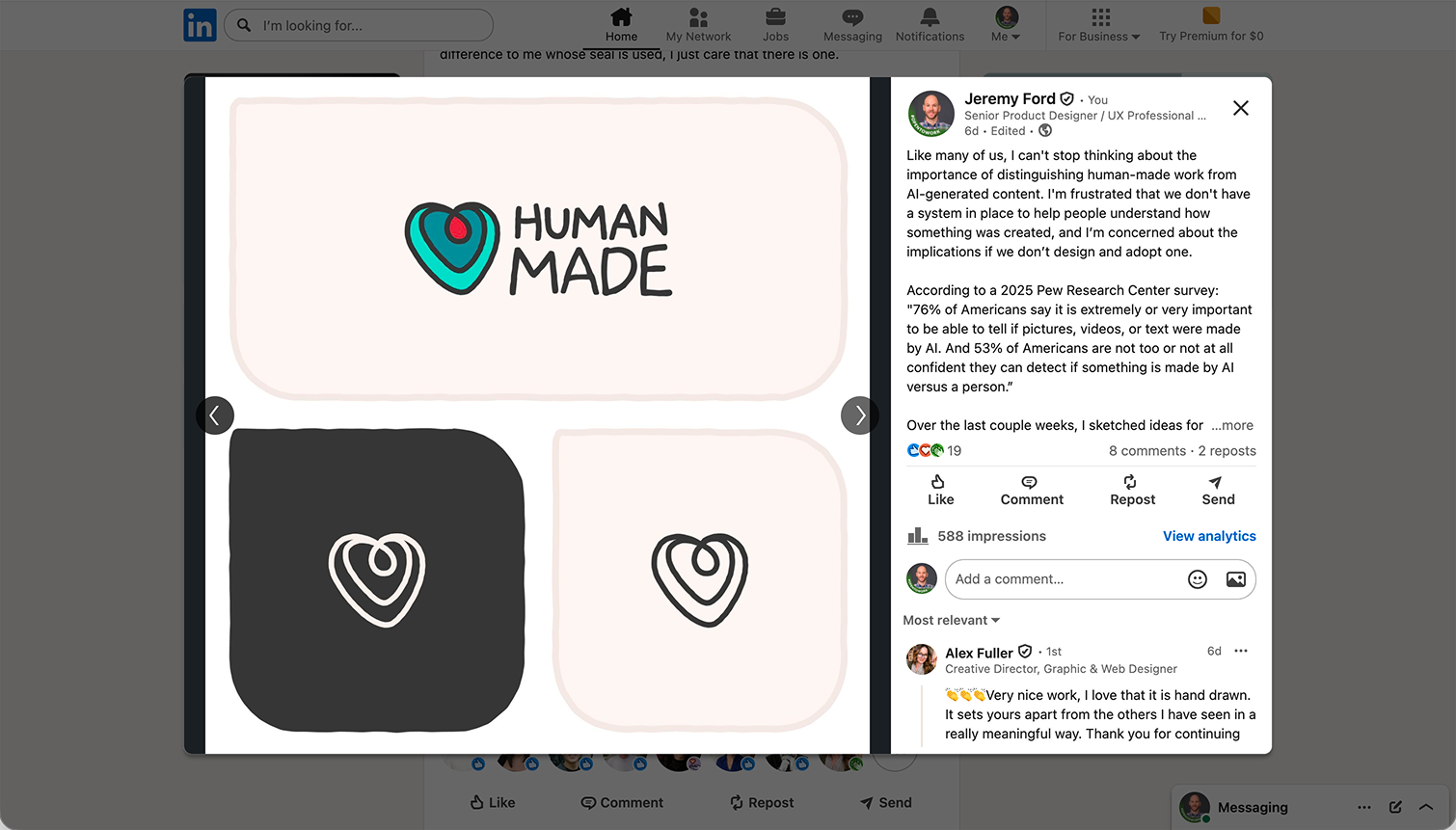
My original LinkedIn post that proposed a Human Made seal people could embed in their work.
Seal design
The icon element of the logo was hand-drawn in Figma, over my original sketch that I drew with pencil and paper. The wordmark element was created by customizing Gaegu, a handwritten-style font designed by JIKJI SOFT, a Korean type foundry. The shapes and colors are intended to represent and celebrate the unique building blocks of human creation: blood, sweat, tears, and love.
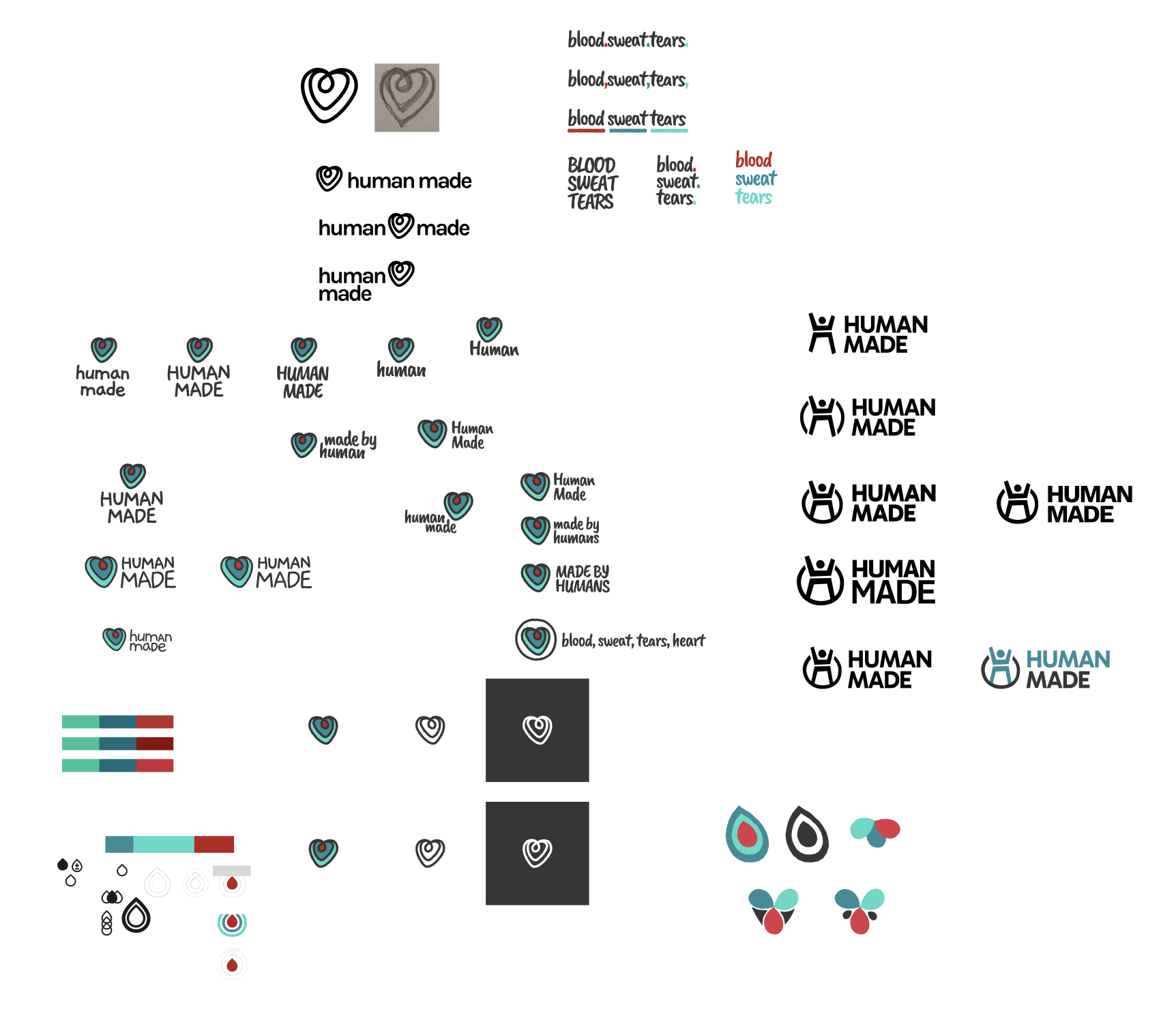
Sketches for the Human Made logo.
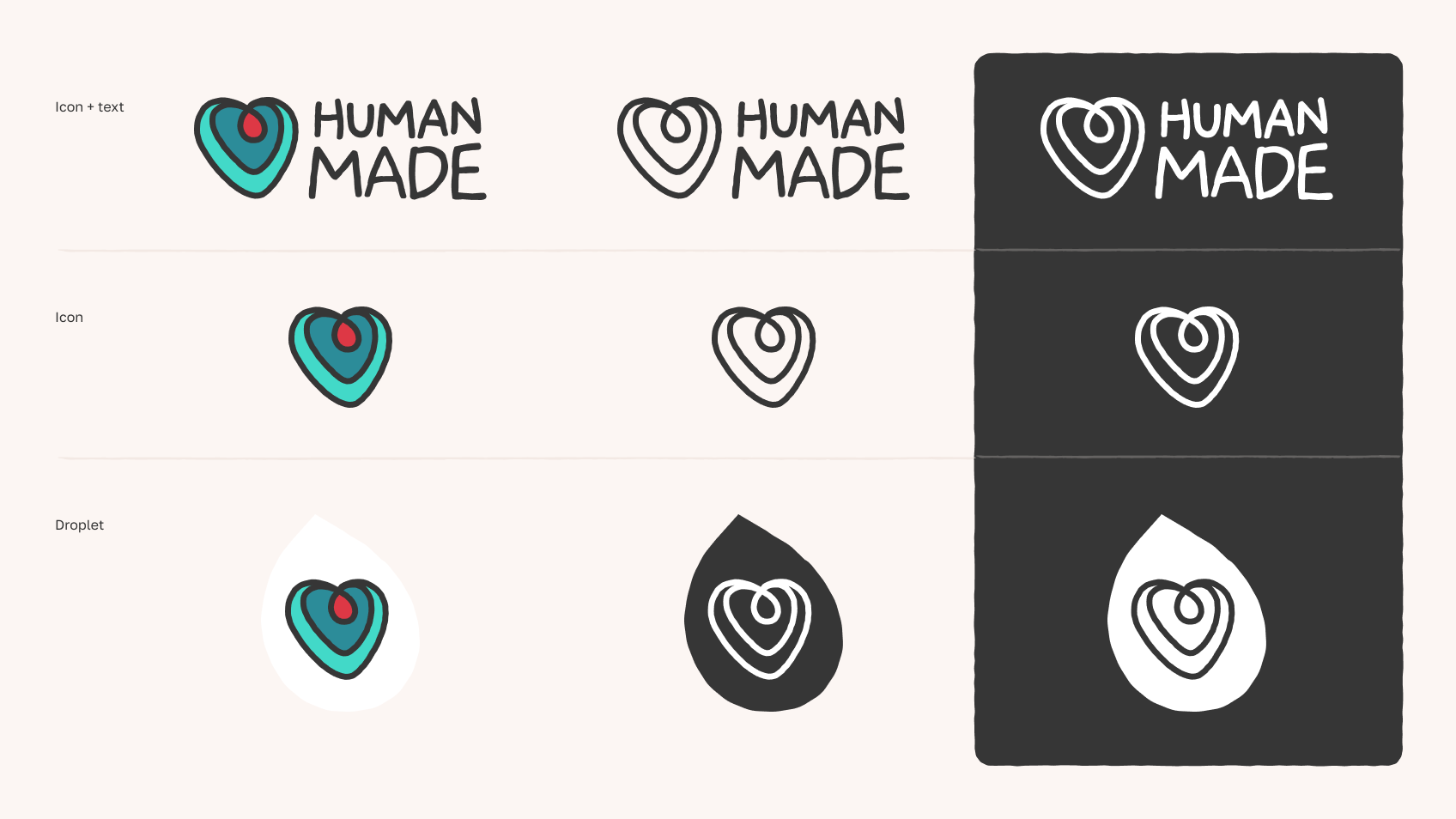
The final Human Made logos shown in various formats and colors to suit varying needs.
Microsite
To release usable seals as quickly as possible, I used Figma to publish an interactive microsite where creators can download assets as PNGs and SVGs. The site also includes recommendations for creators to understand how they can apply the seals to their work: sizing, placement, and alignment.
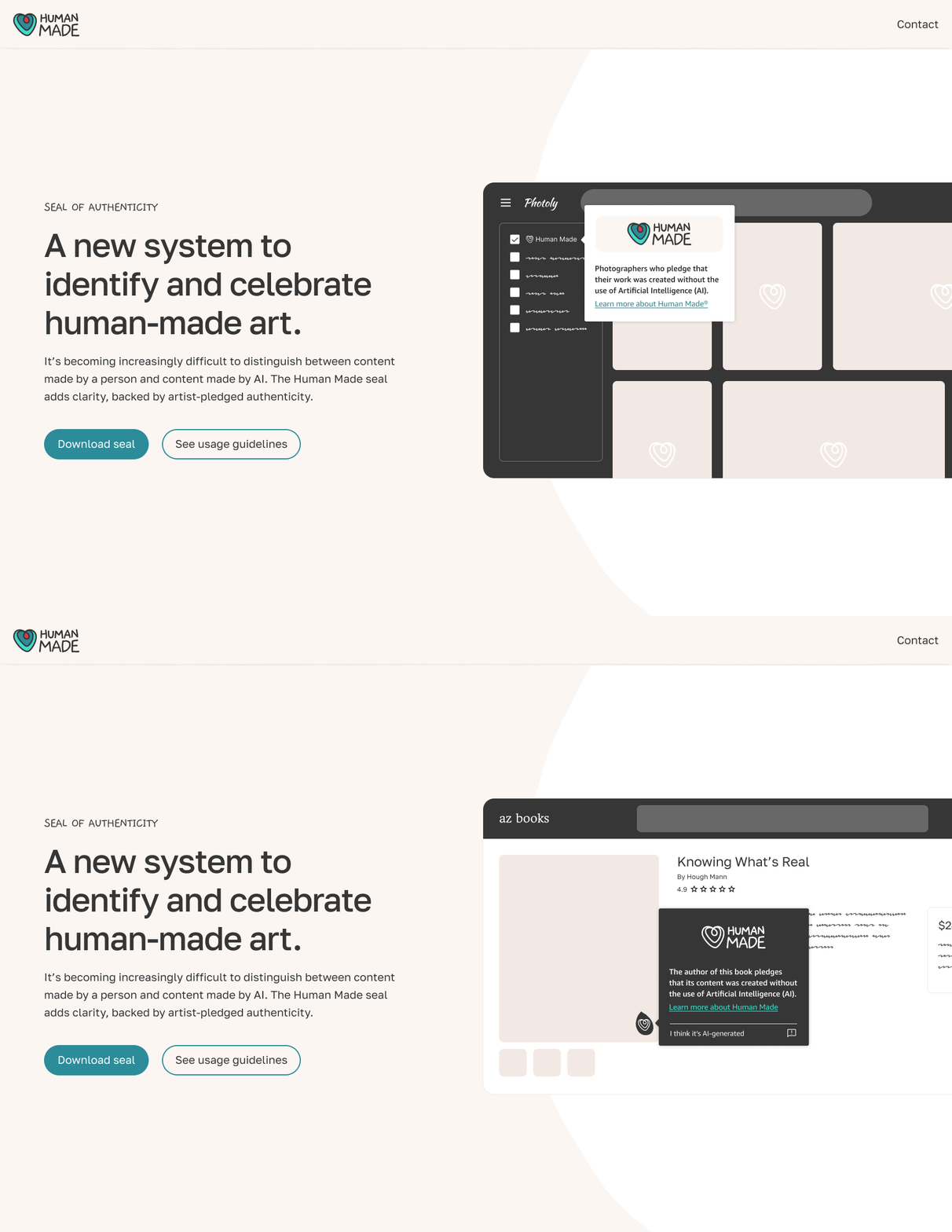
Home page for the microsite that briefly explains the problem and solution.
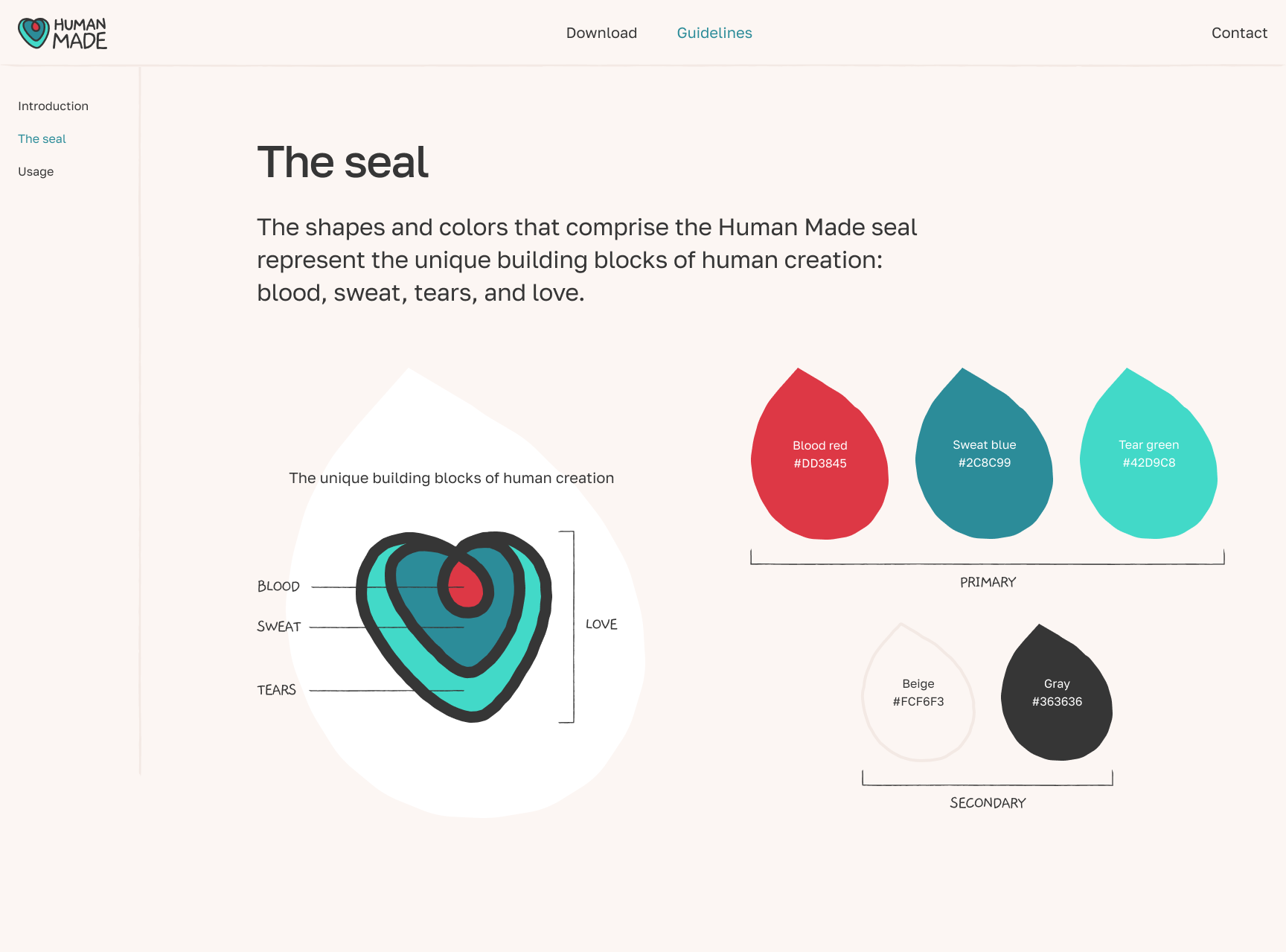
Seal page for the microsite that explains the anatomy and meaning of the logo.
What's next?
Lots of questions remain about the feasability and scalability of a system like this one:
- How might we prevent a seal from being misused/applied to AI-generated content? Human Made operates on the honor system, which means there is nothing restricting its use.
- Is there a percentage of AI assistance that we consider acceptable? For example, if an author writes an article themselves and uses Grammarly to edit the piece, is it accurate to call it human-made? There are many nuances to consider.
- How might we empower content creators to quickly and easily embed the seal in their work? Perhaps there's a tool that can automatically embed the seal instead of creators having to manually affix it to every artifact.
- Who decides what system/seal becomes the standard?
- What about audio? Human-created music and podcasts also need to be differentiated from AI-generated content.
Progress!
As AI technology evolves at a rapid pace, as do tools to detect its use. Since publishing the microsite, I've encountered a few emerging solutions that address the content authenticity issue:
- In August 2026, Anthropic announced it will include a watermark for all Claude-generated text, per European regulations.
- In May 2026, YouTube made their 'AI-generated' label more prominent. Additionally, the label is automatically applied when their detection systems recognize content created using their own AI tools (Veo and Dream Screen) and content containing Coalition for Content Provenance and Authenticity (C2PA) metadata.
- LinkedIn utilizes Content Credentials to indicate if an image was generated using AI.
- Google created SynthID to detect if an image was generated using Google Gemini.
- GPTZero has a browser extension to detect AI usage in blocks of text.
- The University of Chicago developed Glaze, a system that disrupts art style mimicry.